The Department Of Marine & Wildlife Resources
Tuesday, September 22, 2015
The Department of Marine & Wildlife Resources Community- based Fisheries Management Program held a four (4) day workshop last week from September 15-18th 2015. This workshop is to enhance marine stewardship, management and conservation of marine conservation of marine resources with the establishment of Village Marine Protected Areas. The workshop was also to inform communities of marine research results, available assistance provide by our environment partners, and encourage appropriate enforcement mechanisms needed for our Village Marine Protected Areas.
Tuesday, July 28, 2015
Tuesday, June 16, 2015
Summer - time to explore
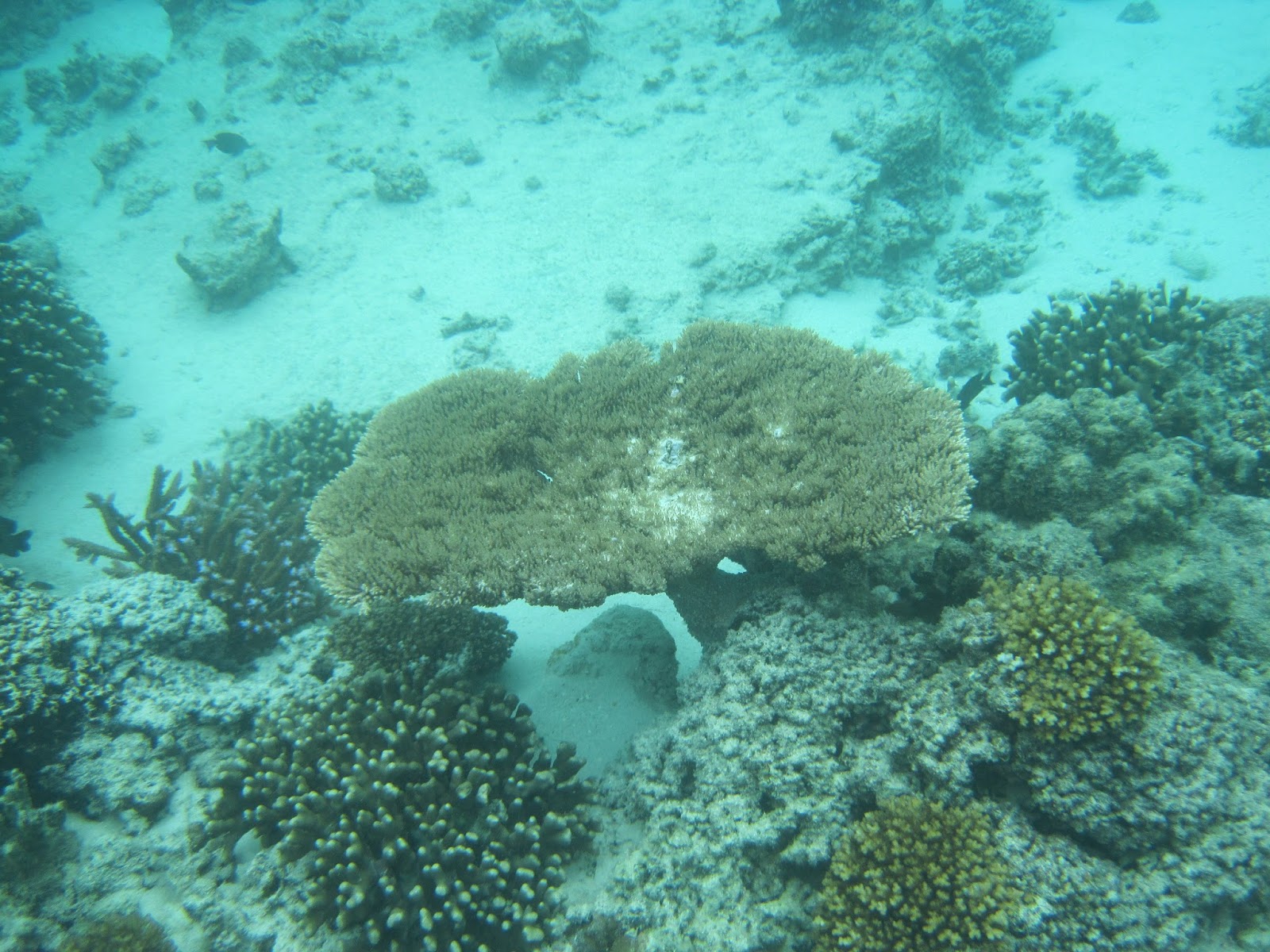
The school year has come to an end and it's time to finally enjoy the summer months. Invest in a mask and snorkel set at Cost-U-Less (<$40), Tropik Traders or Samoa Sports and explore the beauty of marine life that surrounds our islands. We live on an island where your front and back yard is the Pacific Ocean. Ever heard of the Hawaiian fish, Humuhumunukunukuapua'a? Yes, we have it here. Locally, it's called a sumu and commonly known as the Wedgetail Triggerfish. See the manini (Convict tang, Acanthurus triostegus) in action, swimming in a school along our reef. It would be unlikely for you to come out of the water without sighting our alogo (Blue-lined surgeonfish, Acanthurus lineatus). Explore the diversity of our corals that shelter and provide food for our local fish. The corals protect our coastlines and have endured high temperatures from Climate Change. Although, some coral species aren't as resilient as others around the island. Join canoe paddling in the evening at the DDW (Don't Drink the Water) in Utulei. If you aren't comfortable in the water or don't know how to swim, contact the American Samoa Swimming Association for lessons. The weather has finally cleared up so enjoy the sun and go swimming!
![]() |
| Alogo Blue-lined Surgeonfish, A. lineatus |
![]() |
| Sumu Wedgetail Triggerfish, R. rectangulus Hawaii's Humuhumunukunukuapua'a |
![]() |
| Manini Convict tang, A. triostegus |
| Coral reef in Faga'alu |
Monday, June 1, 2015
Monday, April 27, 2015
Coral Bleaching in American Samoa
What is Coral Bleaching?
When corals get stressed by abnormal conditions, they will expel the zooxanthellae (an microscopic algae that lives within the cells of the coral which helps the coral to survive). Zooxanthellae provide the coral with many essential nutrients that are then used by the coral to its calcium carbonate skeleton. In return, the coral provides protection for the algae as well as the compounds necessary for photosynthesis. It is impossible for the coral to survive too long without its algae.
Corals are very sensitive animals for them to thrive, the water must be warm, but not too warm, relatively clear, saline, nutrients poor, and be in shallow waters to get plenty of sunlight. Any small changes in these requirements and the corals will likely get stressed. They may tolerate change, but not for too long.
Once they bleach, the corals are basically starving themselves. If conditions return to normal relatively quickly, corals can regain their zooxanthellae and survive. But the stress occurred also may lead to deceased productivity and growth, and increased likelihood to disease. If the stressful factor remains constant for quite some time it decrease the chance of corals to bounce back and recover.
One of the major findings indicated a mild coral bleaching event in American Samoa. Except for Ta'u and Rose Atoll, around 10% of the coral colonies between 3 and 6 m deep territory- wide, presented signs of bleaching, ranging from pale to stark white due to persistent warm waters. The bleaching seems to mostly impact certain species of fast growing corals. Survey results indicate that the coral bleaching event is mostly happening on the reef flats. Widespread but generally light coverage of partial bleaching has been documented for several coral species to a depth of approximately 40ft from Matu'u near the mouth of Pago Pago Harbor and westward to Leone Bay and Seetaga. It is likely that this pattern can be observed island wide. There are sites that have high bleaching because they have branching corals that are much more susceptible to stress. Over- all, probably less than 10% of the corals in the reef flats are experiencing bleaching. Monitoring of the bleaching event continues, though there is little that can be done to reverse the process immediately. To reduce downtrend impacts of bleaching events it is recommended to carefully manage other stressors such as land- base sources of pollution, water contamination , over- fishing , and other factors that contributes to coral reef degradation.
Will the corals recover?
Only time will tell, temperature have been gradually falling but we have yet to determine if they have been decreasing quickly enough. It will take months to fully survey and determine the extent of coral bleaching in American Samoa as well as to document incidences of disease and mortality due to this heat - stress. Coral bleaching is a tragedy for our territory whom many depend on the reefs for their food and livelihood. Immediate and intensive management is required to try and help our reefs by recovering coral bleaching to a more healthier reef.
What is Coral Bleaching?
When corals get stressed by abnormal conditions, they will expel the zooxanthellae (an microscopic algae that lives within the cells of the coral which helps the coral to survive). Zooxanthellae provide the coral with many essential nutrients that are then used by the coral to its calcium carbonate skeleton. In return, the coral provides protection for the algae as well as the compounds necessary for photosynthesis. It is impossible for the coral to survive too long without its algae.
Once they bleach, the corals are basically starving themselves. If conditions return to normal relatively quickly, corals can regain their zooxanthellae and survive. But the stress occurred also may lead to deceased productivity and growth, and increased likelihood to disease. If the stressful factor remains constant for quite some time it decrease the chance of corals to bounce back and recover.
One of the major findings indicated a mild coral bleaching event in American Samoa. Except for Ta'u and Rose Atoll, around 10% of the coral colonies between 3 and 6 m deep territory- wide, presented signs of bleaching, ranging from pale to stark white due to persistent warm waters. The bleaching seems to mostly impact certain species of fast growing corals. Survey results indicate that the coral bleaching event is mostly happening on the reef flats. Widespread but generally light coverage of partial bleaching has been documented for several coral species to a depth of approximately 40ft from Matu'u near the mouth of Pago Pago Harbor and westward to Leone Bay and Seetaga. It is likely that this pattern can be observed island wide. There are sites that have high bleaching because they have branching corals that are much more susceptible to stress. Over- all, probably less than 10% of the corals in the reef flats are experiencing bleaching. Monitoring of the bleaching event continues, though there is little that can be done to reverse the process immediately. To reduce downtrend impacts of bleaching events it is recommended to carefully manage other stressors such as land- base sources of pollution, water contamination , over- fishing , and other factors that contributes to coral reef degradation.
Will the corals recover?
Only time will tell, temperature have been gradually falling but we have yet to determine if they have been decreasing quickly enough. It will take months to fully survey and determine the extent of coral bleaching in American Samoa as well as to document incidences of disease and mortality due to this heat - stress. Coral bleaching is a tragedy for our territory whom many depend on the reefs for their food and livelihood. Immediate and intensive management is required to try and help our reefs by recovering coral bleaching to a more healthier reef.
Tuesday, April 21, 2015
Illegal Fishing - Malakea
It was pouring rain on Saturday so my
outdoor plans were forfeited for the day, but while driving through Fagaalu I
noticed something interesting and beautiful and disappointing. I often
see the fish vendors' coolers there and sometimes I stop for a fresh fish.
A large and unusual fish put on display caught my eye on this day.
I couldn't resist pulling over and having a closer look.
The fish was lovely and fresh. It
still showed the colors of a live reef fish. The pouring rain had not yet
washed away the mucus that had protected it when it was still living. I
measured the fish with my hands and estimated its size at over one hundred
centimeters. Its vibrant colors, psychedelic patterns, and odd shape were
striking. I lifted it and it certainly weighed over twenty-five pounds.
This fish was impressive!
I imagined it chopped into steaks and
sliced into fillets, and I imagined that the flavor would be a delicious
addition to any feast. I guessed that such a large fish could feed an
entire family several times. Then I imagined the fish swimming, lively on the
reef's edge as I have seen them before. When I saw the fish dead again I
was deeply disappointed. The pouring rain felt like tears of the spirit
striking the earth in mourning for the life of this fish.
![]() |
http://www.photomazza.com/?Cheilinus-undulatus |
"Malakea," said the vendor.
"...from Tula." I already knew what the fish was. Cheilinus
undulatus, also known as the humphead wrasse, maori wrasse, or napolian
wrasse in English, and lalafi or tagafa in Samoan. Being a large example,
it was a malakea. This fish is historically highly prized for table fare, but
has been over fished throughout much of its range. As a result it is an
endangered species and is illegal to catch, kill, or sell. Possession is
punishable by law.
I am a fisherman. I know the thrill of bringing a large fish
to the surface. I know the reward of eating the fish. I understand
the self-restraint required to swim by this fish without striking it with the
spear. But I would never have killed this fish... not because it's
illegal, but because I respect its life and its role on the reef. I value
my role as a steward and protector of creation and life, and I know that
Malakea are rare in American Samoan waters and they take many years to grow
into adults. This fish is more valuable to me and to my entire community
when it is living and reproducing; enabling its family to grow to abundance.
If we protect this species, it could once again provide a reliable source
of protein and income for my family and for yours.
It is illegal and irresponsible to fish, sell, or eat humphead wrasse. Let the malakea live.
Tuesday, April 14, 2015
Invasion of the Starfish
The Crown-of-thorns Starfish (Acanthaster planci), aka COTS or 'alamea, have been popularly known for killing corals and their
poisonous spines. In the late 1970’s and early 1980’s, large numbers of the
starfish were found in the waters of American Samoa and contributed to more
than 80% loss of corals in Tututila.
Although considered native, it is normal to see one or two in the
village reef. Therefore, larger numbers
ranging in the 10s or 20s would be considered abnormal. In 1977, an unusually large number of alamea were sighted and led to the removal
of 480,000 starfish. There were still
more starfish left on the reef and there was a great impact in fish populations
(Buckley, 1986). It is estimated to take
more than 50 years for corals to recover from an outbreak and presently, the
coral reefs of American Samoa haven’t completely recovered.
Program to remove the starfish from the reef from 2012 to 2014 have reached
15,000! Hundreds and thousands of 'alamea were found mostly on the north
side of the island of Tutuila, including some of our Village MPAs: Fagasa and Fagamalo.
We, Samoans, have always believed that every living thing has a purpose - E tofu meaola ma lona aoga. Unfortunately, there haven't been any benefits found through research and experience. Like mentioned before, their spines are poisonous!
If you ever get stung by a Crown-of-thorns starfish, try to squeeze out the poison and spine from the would using tweezers. Then soak the wound in hot water (hot enough to endured for a long period) for more than an hour so the venom can decompose. Be advised, do NOT cover the wound with a band-aid, tape or dressing. If you experience difficulty breathing or numbness or if the pain and swelling continues, see a doctor as soon as possible. Although there is a Samoan proverb: E fofÅ le 'alamea le 'alamea. This means you can use the same poisonous starfish to treat the poison. You carefully turn the 'alamea upside down and place your wound on its tube feet and it will suck out the poison. I suppose you can say, this is ONE good deed by the starfish.
The removal of the starfish is still ongoing since the sightings in 2012. Initially, the removal of the starfish are by the use of spears. They were collected into wired bins and brought to shore to be measured and killed by having them sundried. These starfish were at one time, given to farmers to be used as fertilizers on their plantations. It was a strenuous job to collect and spread them to be killed. This is no longer practiced since another method has been introduced. Now, they are being injected by Ox bile, which is a more effective method that has been practiced on the corals of the Great Barrier Reef.
Efforts in removing this starfish is still ongoing. Greatest appreciation and gratitude to our collaborative partners in the efforts to eradicate the starfish from our territorial waters. If you see this starfish in your village reef area, contact us at (684) 633-4456. We will send a team to evaluate the damage and remove as much starfish from your area.
Thursday, November 13, 2014
P.A.L.S Week
The Department of Marine & Wildlife Resources will be opening P.A.L.S Week Celebrations this Friday (Nov. 14, 2014) with the opening of the Floating Dock Marina, across McDonalds in Fagatogo.
In addition there will activities throughout the rest of the week. Community-based Fisheries Management Program will putting up a booth on Friday (November 21, 2014). If this is your first (or hundredth) time hearing about our program, we would like to hear from YOU.
If you want to know more, check out the department website: www.asdmwr.org
Monday, October 27, 2014
More Coral ID fun!
The best part of the Coral ID Workshop with Russell Kelley is the satisfaction of finally breaking through the barriers of identifying corals. The Coral Finder Toolkit is genius!
Years of conducting biological monitoring surveys, I have tried my hand at identifying corals, but I have failed. This is mainly because I have applied the same techniques in identifying fish to corals: color and appearance. Growth forms are complex as it is so it was easier to do so. In the end, frustration led to the conclusion that all corals look the same. Now, there is an adrenaline rush to identifying corals because there is no longer the frustration of saying : it looks like this, but it looks more like this...
The experience to learn corals was enjoyable and it was all thanks to Russell Kelley and Rachel Pears. Thanks guys! I'm game to do coral species for the next survey. Like I said before, the Coral Finder Toolkit is GENIUS!
Years of conducting biological monitoring surveys, I have tried my hand at identifying corals, but I have failed. This is mainly because I have applied the same techniques in identifying fish to corals: color and appearance. Growth forms are complex as it is so it was easier to do so. In the end, frustration led to the conclusion that all corals look the same. Now, there is an adrenaline rush to identifying corals because there is no longer the frustration of saying : it looks like this, but it looks more like this...
The experience to learn corals was enjoyable and it was all thanks to Russell Kelley and Rachel Pears. Thanks guys! I'm game to do coral species for the next survey. Like I said before, the Coral Finder Toolkit is GENIUS!
Friday, October 3, 2014
Coral Identification Capacity Building Program in American Samoa
Russell Kelley is in town!
Russell Kelley is the founder of the Coral Finder Toolkit and is in American Samoa to teach managers and biologists easy ways to identify coral species. This tool is being introduced in the Coral Finder Toolkit Workshop from September 30 - October 3, 2014. This workshop is being attended by researchers in the Department of Marine & Wildlife Resources, National Oceonographic Atmospheric Administration (NOAA) and the Coral Reef Advisory Group (CRAG).
Subscribe to:
Comments (Atom)


.jpg2.jpg)